


Al Qadib

Al Qadib
Al Qadib
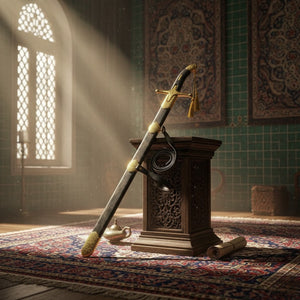
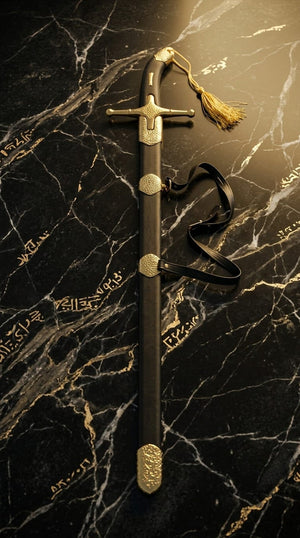
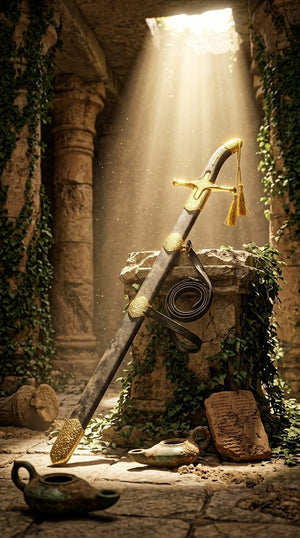
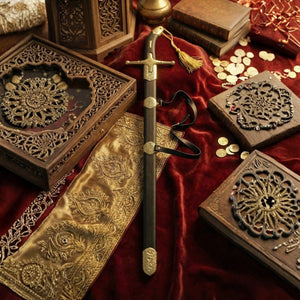
Replica of sword attributed To Prophet Muhammad PBUH
The al-Qadib remains one of the most unique swords in the collection of the Sacred Trusts. Unlike the broader blades typically associated with 7th-century warfare, its design is characterized by a slender, rod-like profile that reflects its purpose as a traveler’s companion for defense rather than a weapon of the battlefield.
Key Features and Craftsmanship
The Blade: Its thin, elegant form is crafted for light carry. The side of the blade features a striking silver inscription of the Shahada, including the full lineage of the Prophet (PBUH) back to Abd al-Muttalib.
The Scabbard: The sword is paired with a scabbard made of dyed black animal hide, finished with brass buckles that provide a stark, functional contrast to the dark leather.
Symbolism: In Islamic history, it is recognized as a "sword of companionship." Historical records indicate it stayed within the Prophet's (PBUH) household and was later utilized by the Fatimid caliphs, never being recorded as having been used in any specific battle.
Historical Context
Currently preserved in the Topkapi Palace Museum in Istanbul, the al-Qadib serves as a significant piece for those studying the personal effects of the Prophet (PBUH) and the artistic traditions of early Islamic metalwork. Replicas of this piece often focus heavily on the precision of the silver calligraphy and the specific materials of the hilt and scabbard to capture its historical essence.


